A strong core foundation improves jump rope technique and overall body stability.
Building a strong core isn't about crunches alone — it's about creating a foundation that supports every movement you make. When you're working on your core strength, you're essentially training your body to handle real-world demands with confidence and control. This matters whether you're lifting heavy weights, running errands with groceries or preparing to jump rope for the first time. A stable midsection protects your spine, keeps your posture upright and gives you the balance needed for more demanding exercises. Many people rush into intense cardio routines without addressing this fundamental gap and it shows in their form, their endurance and their recovery time. Consider what happens when you add skipping into your training.
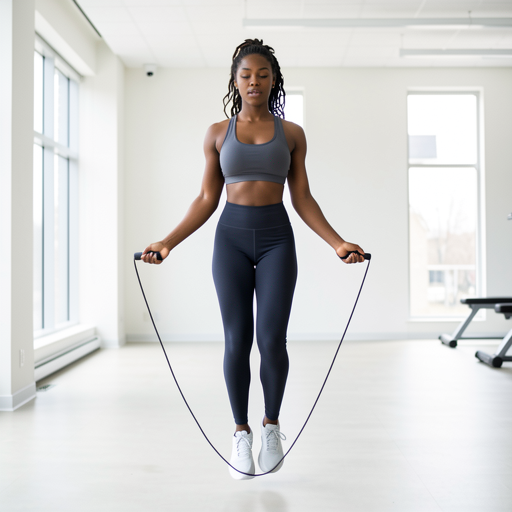
The fast footwork, the constant engagement of your stabilizer muscles, the rhythmic breathing — these all demand a solid core to function properly. Without that foundation, your form breaks down, your lower back takes unnecessary strain and you'll fatigue much faster than you should. The same principle applies to jump rope techniques. You wouldn't try sprinting before learning to walk properly, so start with basic core work like planks, bird dogs and single-leg bridges. These movements build the endurance and control you'll need and they translate directly to better performance when you finally pick up the rope. Here's what most people miss: core strength isn't just about visible abs.
🚀
It's about deep stabilizer muscles that keep your spine aligned during every single rep and step. When these muscles engage properly, you stand taller, move more efficiently and feel genuinely resilient. I've seen athletes transform their entire approach to training once they prioritized core stability. Suddenly exercises that felt impossible become manageable. Their posture improves. They recover faster between sessions.
👋🏽
And yes, their rope sessions become noticeably longer and more effective because their bodies finally have the support system they need to handle the intensity. Start with a simple routine — three core exercises, three times per week and stick with it for at least six weeks before judging the results. Focus on quality over quantity. Hold your plank an extra ten seconds. Slow down your bird dog.
🏊️
Engage your abdominals before you start skipping, not after you're exhausted. Your body will adapt, your posture will shift and you'll notice everyday movements becoming easier. That's the real payoff. Not a six-pack on its own, but a body that works the way it should, efficiently and without complaint. Pick up a rope, test your new stability and keep building from there.